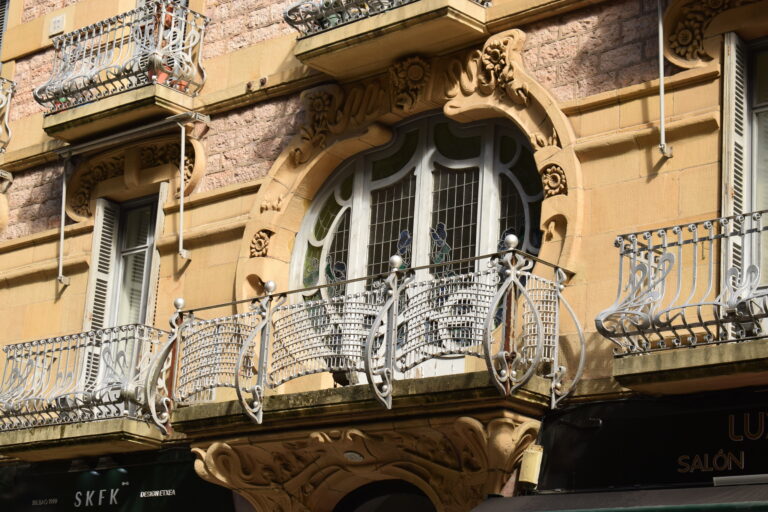
I moved to Egia a year ago… and I absolutely love my new neighbourhood! That’s why I’d like to encourage you to discover Egia for yourselves. It’s a neighbourhood full of character, with a strong Basque identity, and has always stood out for its vibrant music, cultural and artistic scene. It has often been compared to Greenwich Village or Soho (on a smaller scale and with a distinctly San Sebastian twist, of course! ;)), thanks to the large number of artists and cultural groups based here.
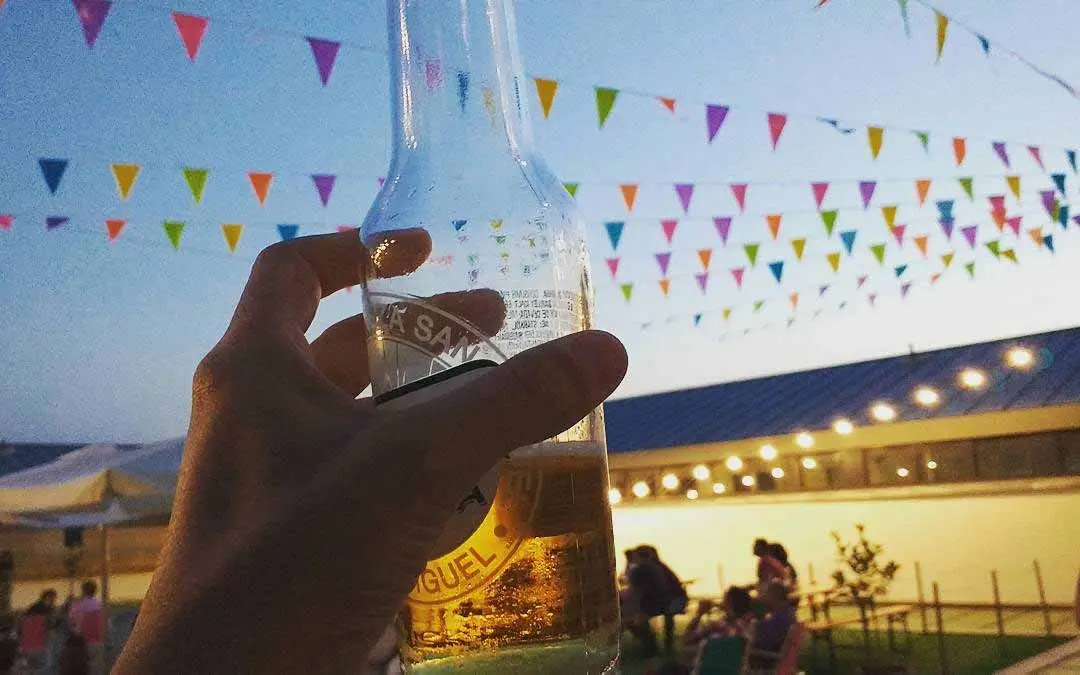
Egia is a lively neighbourhood, full of energy and home to numerous cultural and artistic venues, including Tabakalera and Dabadaba. At the same time, the neighbourhood hosts a wide range of activities and traditional local festivities, such as the “Porrontxoak”, and boasts extensive green spaces. It has also managed to preserve its working-class roots and activist spirit, with its grey buildings, independent local shops, slightly run-down corners and traditional bars. They might not be the trendiest places in town, but you can be sure of enjoying good food and drinks at very reasonable prices.
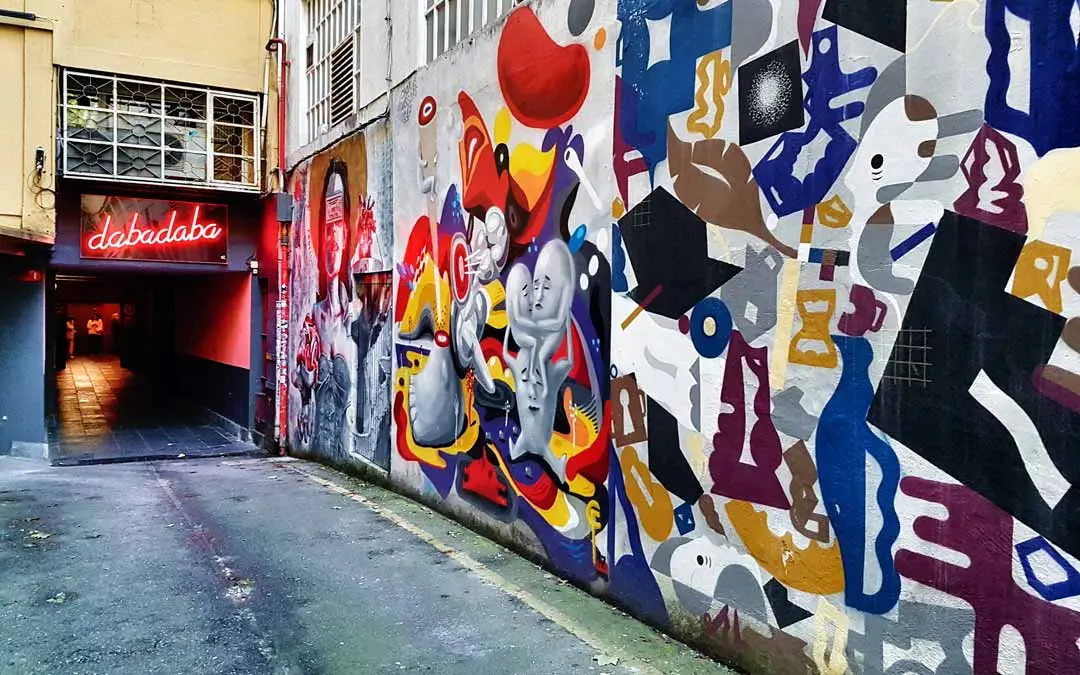
As you wander through Egia’s streets, you’ll also come across numerous graffiti artworks and murals that add colour and a distinctive personality to the neighbourhood. These expressions of street art reflect its creative and alternative character.
As you wander through Egia’s streets, you’ll also come across numerous graffiti artworks and murals that add colour and a distinctive personality to the neighbourhood. These expressions of street art reflect its creative and alternative character.


So, what can you do in Egia? Well, there’s plenty to choose from…
During the day
If you’re coming to Egia from the city centre or the train or bus station, look out for the North Railway Station Portico (1906), popularly known among locals as the “Brandenburg Gate”. This will eventually serve as an entrance to the high-speed rail station.

The North Railway Station Portico, or “Brandenburg Gate”, in the background of the photograph
After passing through the tunnel next to the “Brandenburg Gate”, you’ll find Tabakalera, the International Centre for Contemporary Culture. The building was formerly a tobacco factory, which explains its name. Here’s an interesting fact: in the 1920s, most of the factory’s workers were women. As a result, the neighbourhood was home to many independent women earning their own wages. San Sebastian was quite a liberal city back in the 1920s! During the Belle Époque era, women enjoyed an active social life, taking part in races and festivities, practising sports and much more.

Exhibition at Tabakalera
I’d recommend checking Tabakalera’s events calendar in advance, as you might find something that catches your interest. In any case, it’s well worth stepping inside and exploring the different spaces. There are 37,000 m² to discover! And don’t forget to head up to the fourth-floor terrace, where you’ll enjoy a different perspective of the city.


After leaving Tabakalera, you can enjoy a pleasant stroll through Cristina Enea Park, a magnificent green space. Its stunning gardens were designed by Pierre Ducasse, who was no less than a gardener to the Spanish Royal Household!
The Duke and Duchess of Mandas were Fermín Lasala y Collado, originally from San Sebastian, and Cristina Brunetti, an Italian noblewoman who held the titles of Duchess of Mandas and Villanueva.
Both Fermín and his father were influential public figures in the city. Their positions meant that they frequently travelled abroad, so it’s perhaps no coincidence that the railway station is located right next to Cristina Enea…
The park was named Cristina Enea in honour of Cristina Brunetti. In Basque, “Enea” is a suffix commonly used in the names of houses and palaces. You may have heard of Ajuria Enea, the official residence of the Lehendakari (President of the Basque Government). Its name comes from the Ajuria family, who originally built the palace. And if all that walking around the park has made you hungry, don’t worry: the neighbourhood’s bar area is just a short walk away!

A peaceful spot to relax in Cristina Enea Park, opposite Tabakalera
And in the evening, after dark…
If you’re looking for something to do in the evening, take a look at the programme at Gazteszena, which offers a wide variety of cultural events, particularly dance and theatre performances. On the other hand, if you’d rather round off your day in one of the city’s alternative venues, Egia is the perfect neighbourhood for that too.
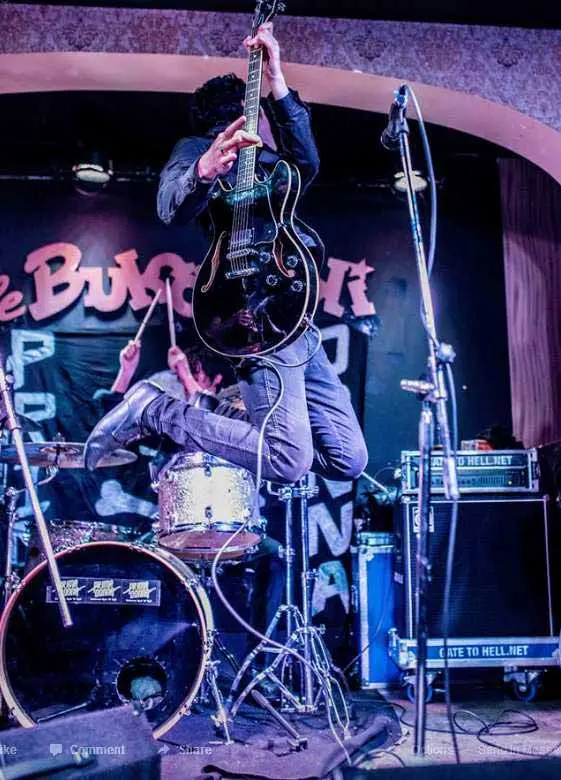
To experience the local nightlife, head to Le Bukowski, one of San Sebastian’s legendary music clubs, which regularly hosts live concerts. On Fridays and Saturdays, it stays open until 4 am. Another great option is Dabadaba, a more recent venue that opened in 2014 and has since become an essential part of San Sebastian’s nightlife scene. It hosts concerts, parties, DJ sets and much more. And, by the way, it’s also worth visiting during the day, as it organises exhibitions, small markets and other activities (there’s even table football and board games).
To experience the local nightlife, head to Le Bukowski, one of San Sebastian’s legendary music clubs, which regularly hosts live concerts. On Fridays and Saturdays, it stays open until 4 am. Another great option is Dabadaba, a more recent venue that opened in 2014 and has since become an essential part of San Sebastian’s nightlife scene. It hosts concerts, parties, DJ sets and much more. And, by the way, it’s also worth visiting during the day, as it organises exhibitions, small markets and other activities (there’s even table football and board games).
And if it’s Friday… don’t miss pintxo-pote in Egia’s bars! Enjoy a pintxo and a drink for around €2.50–€3.50, with a fantastic atmosphere guaranteed!
For more information about the neighbourhood and the artists and cultural associations based here, visit the website of the book “To Auzoa/Toma Barrio“. The publication features 82 artists who live or work in Egia, selected from more than 200 identified in the neighbourhood. In its introduction, Egia is described as “San Sebastian’s very own Soho”.
For more information about the neighbourhood and the artists and cultural associations based here, visit the website of the book “To Auzoa/Toma Barrio“. The publication features 82 artists who live or work in Egia, selected from more than 200 identified in the neighbourhood. In its introduction, Egia is described as “San Sebastian’s very own Soho”.