On this map, you can see the different Art Nouveau buildings
In 1863, the demolition of San Sebastian’s city walls began, making way for the project that would change everything: the Cortázar expansion. Fifty years of urban development transformed Donostia into a cosmopolitan tourist city.
This architectural boom coincides with the height of San Sebastián’s Belle Époque, in the late 19th and early 20th centuries, when the European aristocracy and upper bourgeoisie began spending their summers in the city, leading to a major cultural, economic and social transformation.
In this context, Modernism —or Art Nouveau— arrived in San Sebastian at the beginning of the 20th century, an artistic movement from the late 19th century that represented a break with the dominant styles of the time. This new aesthetic drew inspiration from nature and incorporated innovative materials from the Industrial Revolution, such as steel and glass.
This architectural boom coincides with the height of San Sebastián’s Belle Époque, in the late 19th and early 20th centuries, when the European aristocracy and upper bourgeoisie began spending their summers in the city, leading to a major cultural, economic and social transformation.
In this context, Modernism —or Art Nouveau— arrived in San Sebastian at the beginning of the 20th century, an artistic movement from the late 19th century that represented a break with the dominant styles of the time. This new aesthetic drew inspiration from nature and incorporated innovative materials from the Industrial Revolution, such as steel and glass.
As we walk through the city, we can identify buildings belonging to this movement by looking at their most characteristic elements, such as curved lines, organic shapes and elaborate, exuberant ornamentation, designed to create a sense of beauty and wonder in the viewer.
Art Nouveau in San Sebastian is generally more restrained and understated than in other cities, such as Gaudí’s Barcelona. San Sebastián still preserves numerous examples of this style, reflecting the period of urban splendour experienced by the city.
Art Nouveau in San Sebastian is generally more restrained and understated than in other cities, such as Gaudí’s Barcelona. San Sebastián still preserves numerous examples of this style, reflecting the period of urban splendour experienced by the city.
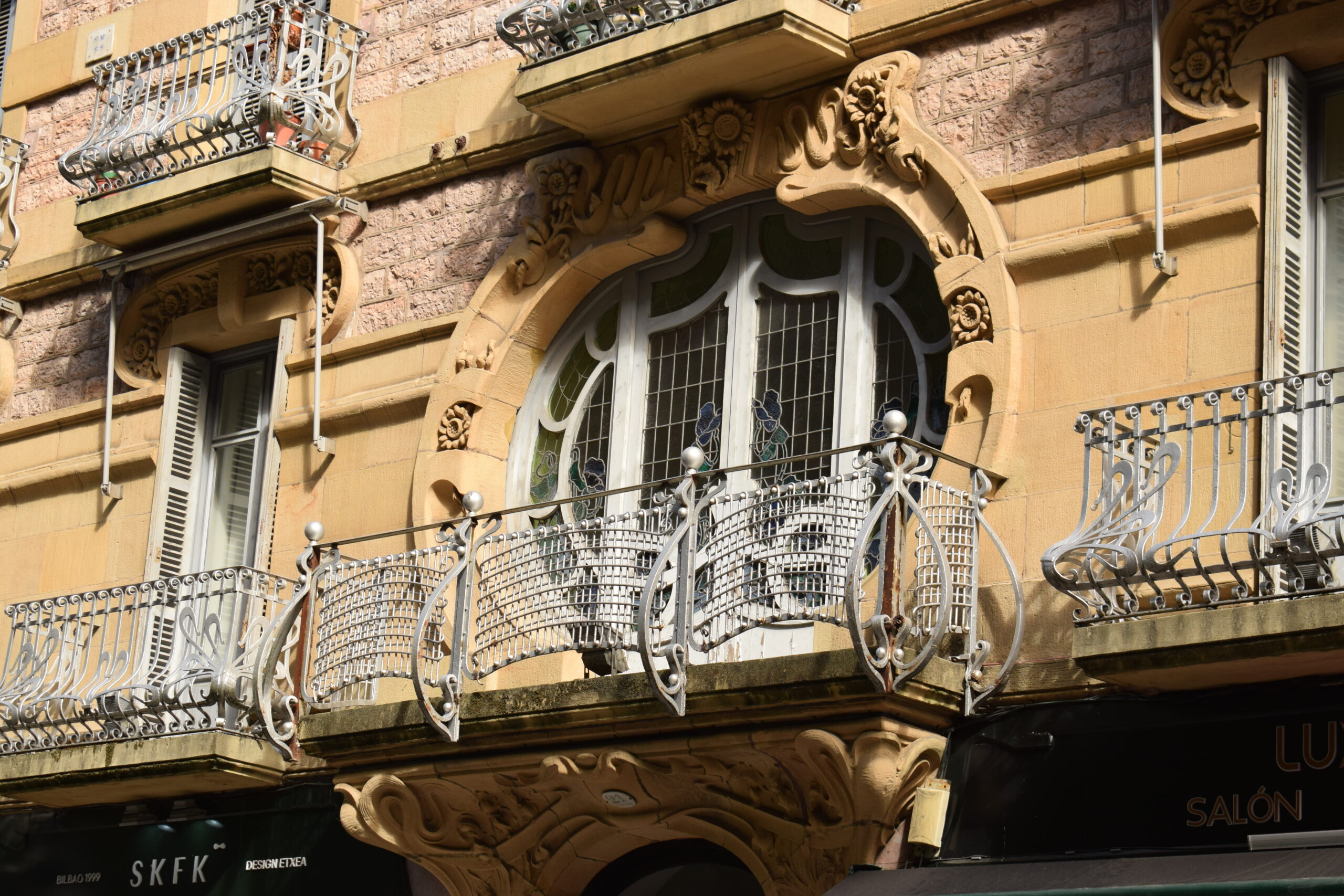
Garibai 21, where it all began
Ramón Cortázar designed Garibai 21 in 1903. Considered one of the city’s first Modernist buildings, it stands out for its organic forms and asymmetry, with different decoration on each of its four floors.
Prim Street
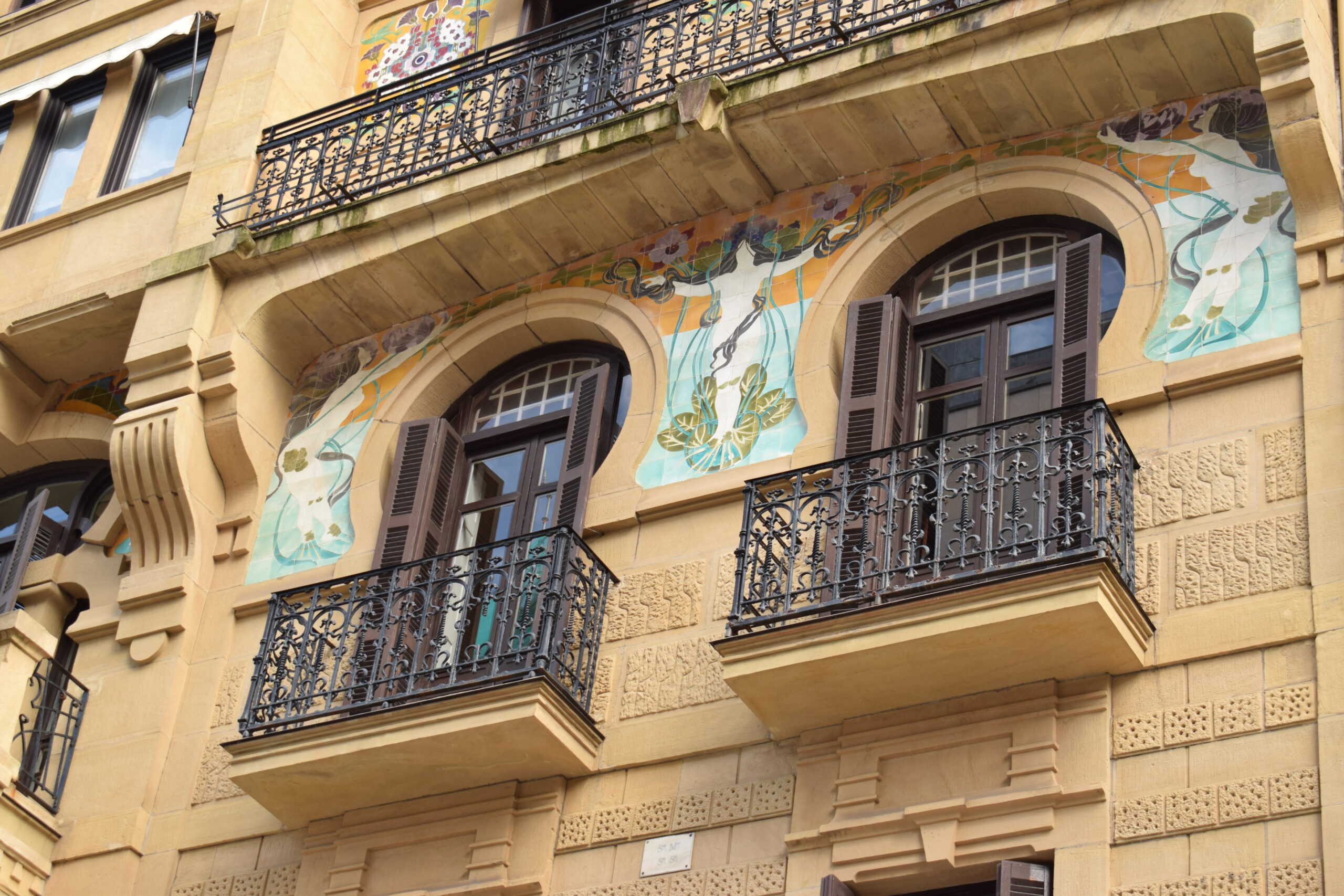
Prim Street is one of the finest examples of Art Nouveau in Donostia, with notable buildings such as Prim 17 and its spectacular ceramic tile murals with floral motifs. The building was designed by architect Ramón Cortázar in 1904, while the murals are the work of Daniel Zuloaga, uncle of the painter Ignacio Zuloaga.
Urbieta Street
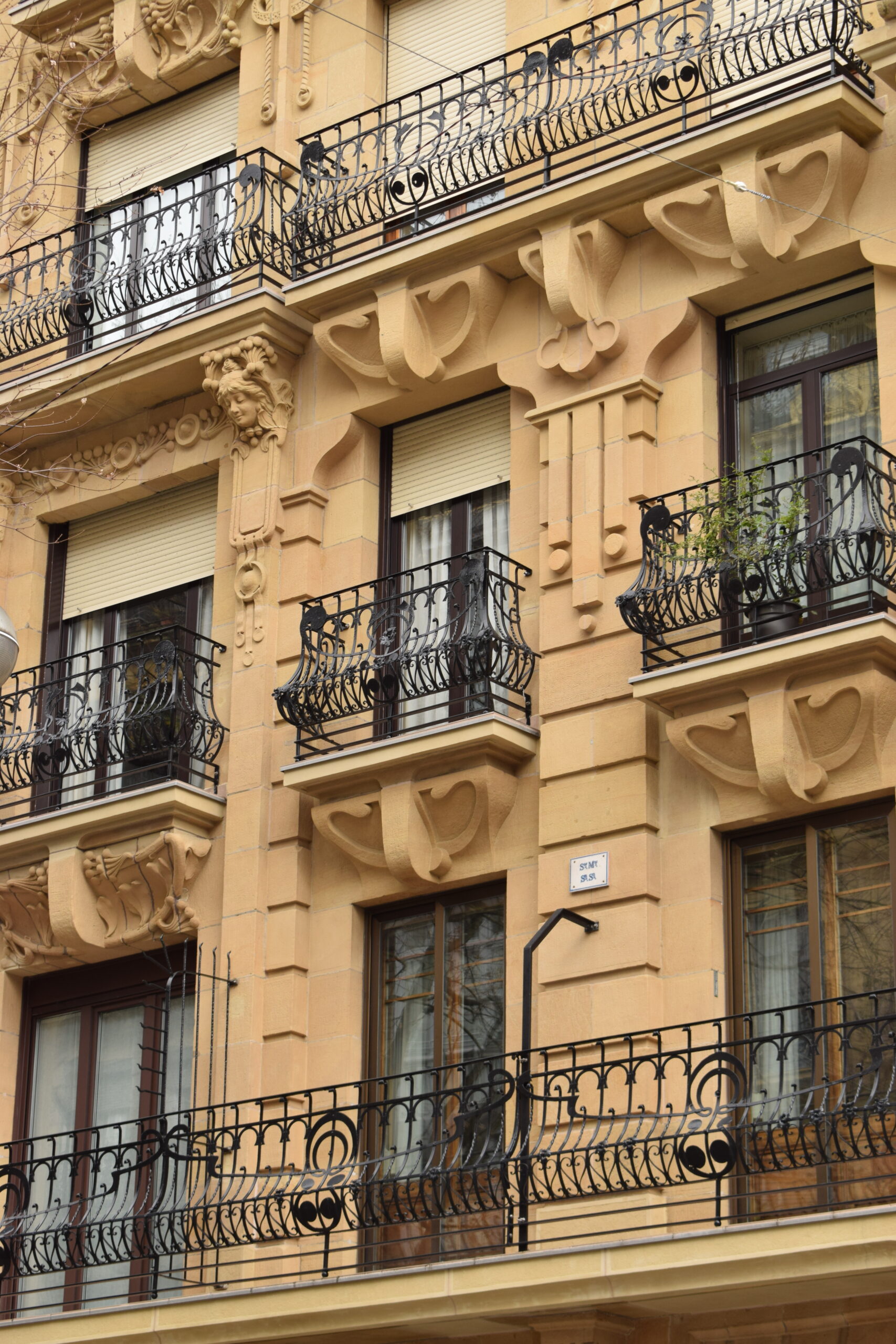
Several Modernist buildings are also found on Urbieta Street, many of which retain facades that have remained virtually intact since the early 20th century. The building at number 54, designed by Luis Elizalde in 1906, shows characteristic elements of this artistic style, such as organic lines and nature-inspired decorative features.
Larramendi Street
From 1908 onwards, Modernism began to give way to other movements, such as Eclecticism and the Neo-Basque style. This can be seen in the Larramendi 1 building, designed by Augusto Aguirre, which combines Eclecticism with Modernist elements. One of the last expressions of Art Nouveau in the city.
The Boulevard Kiosk
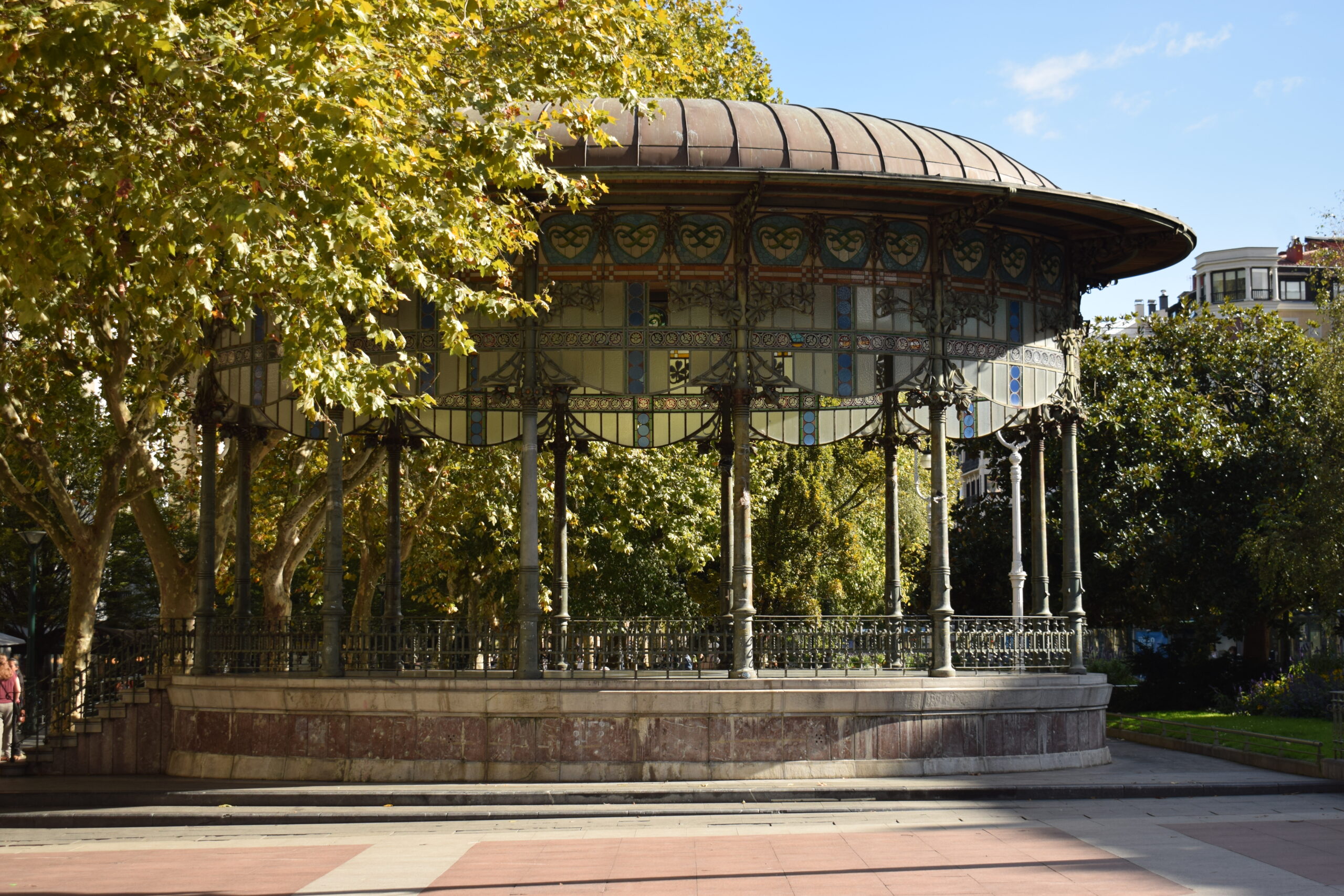
The kiosk on the Alameda del Boulevard was designed by Ricardo Magdalena in 1906. Its iron structure and stained-glass windows make it a perfect example of San Sebastian’s Modernist style, sober and elegant.
Until the early 20th century, the city’s architecture was influenced by eclecticism and traditional French Romanticism, so much so that it earned the nickname ‘Little Paris’. However, the influence of Art Nouveau and the construction of the first Modernist buildings brought a major change to the city’s aesthetic.
A walk through Donostia reveals more examples of Art Nouveau on streets such as Hondarribia, Easo, Moraza and Arrasate, among others. All you have to do is look up to see wrought-iron balconies, stained-glass windows, floral motifs and facades that still retain the Modernist spirit of the early 20th century.
A walk through Donostia reveals more examples of Art Nouveau on streets such as Hondarribia, Easo, Moraza and Arrasate, among others. All you have to do is look up to see wrought-iron balconies, stained-glass windows, floral motifs and facades that still retain the Modernist spirit of the early 20th century.


